Tuesdays in Autumn

I've read a number of books about typography & type design in my time but none for a quite a while, until my gaze fell on a second-hand copy of Simon Garfield's 2010 book Just My Type at Broadleaf Books in Abergavenny the other weekend. I finished reading it on Wednesday. It's an amiably light and layman-friendly ramble through the subject, re-treading a fair amount of ground I'd covered before but also meandering (at times a little aimlessly) across terrain that was new to me, with several chapters about digital and web-based typography.

Although sixteen years ago is hardly the distant past, the chapters on the graphic design used by the first of Obama's presidential campaigns; the lettering on Lily Allen's and Amy Winehouse's albums; and some of the new fonts introduced in Windows Vista: these all felt like dispatches from what is already an impossibly bygone age.


I'm partial on occasion to some Weird literature (with a capital W). As with other fields, however, my coverage of the genre has been patchy to say the least. For instance, until this week I had never read anything by one of the more notable and prolific authors placed under that umbrella: Brian Evenson. I opted to try a 2004 volume of his short stories, The Wavering Knife: I liked the look of its cover design. The endorsements on the back of the book come from such figures as Samuel R. Delany, George Saunders and, unexpectedly, Gilles Deleuze.

The stories within run a gamut between the grimly comedic and the bleakly tragic. All are quite short, a few of them too brief, I felt, to register much of an impact. Others, despite their brevity, are quite intricately constructed. Very little of the book's weirdness comes from the fantastical or the supernatural; much more from the minds of its characters who are variously obsessed, compulsive, deluded or traumatised. The persons of the book are often mononymous, working out their pathologies against lightly sketched backdrops. One can sense Kafka and Beckett as influences, even without any strong likeness to their work.

I was favourably enough impressed by the book to want to seek out more of Evenson's writing in due course; not quite impressed enough to want to do so with immediate urgency.


My red wine of the week has been San Tenzo Langhe Nebbiolo. I bought it at Lidl several months ago. Indeed it's my red wine of the year, by virtue of being the only one I've had in 2026 thus far. My constitution, alas, seems decreasingly tolerant of a glass or two of something red, which is disheartening given how much I enjoy drinking the stuff.

In the first few sips of this particular wine I couldn't discern much aside from its scaffolding of tannins. As my palate grew accustomed to it, fragrant and ripe red fruit flavours emerged: delicious. It went down smoothly and I was happy. I was afterwards unhappy with the repercussions on that night's sleep as my innards made heavy work of metabolising it. And that after just a third of a bottle.
Reading for me tends to be a thing of feasts and famines, done in fits and starts. While much of this month has been a dry spell. I did finish a book on Friday: Debit and Credit, a slim, early '70s collection of poems by the Sicilian author (and 1959 Nobel laureate) Salvatore Quasimodo, in translations by Jack Bevan.

From 'Only If Love Should Strike You':

...do not forget
to be animal, fit and sinuous,
torrid in violence, wanting everything here
on earth, before the final cry
when the body is cadence of shrivelled memories
and the spirit hastens to the eternal end:
remember that you can be the being of being
only if love should strike you right in the bowels.

It's a very short book, but a nourishing one, and it felt like it did me good.


Lately I've been listening to and enjoying an increasing amount of what might be termed 'jazz for the elderly, by the elderly'. For instance, when they recorded their wonderful album Jasmine, Keith Jarrett's and Charlie Haden's combined age was about 130. Charles Lloyd was an impressive 85 when recording his record The Sky Will Still Be There Tomorrow. And Carla Bley was in her mid-70s when her album Trios was made, with neither of her bandmates spring chickens either (this one is a new addition to my collection, arriving on Friday). Moderate tempos predominate, with reflective and nostalgic moods the norm. I can certainly see myself getting more of this kind of thing.


Cheese of the week has been Fourme d'Ambert. I'd been recommended it a few months ago but hadn't spotted any until a visit to Madame Fromage in Abergavenny on Saturday. Creaminess and 'earthiness' in a cheese are characteristics I particularly prize, and this one has both in equitably balanced abundance. I suspect my piece may be verging on maximum ripeness. Amid its rich blend of mild flavours I can sometimes discern an intriguing anise-like note.

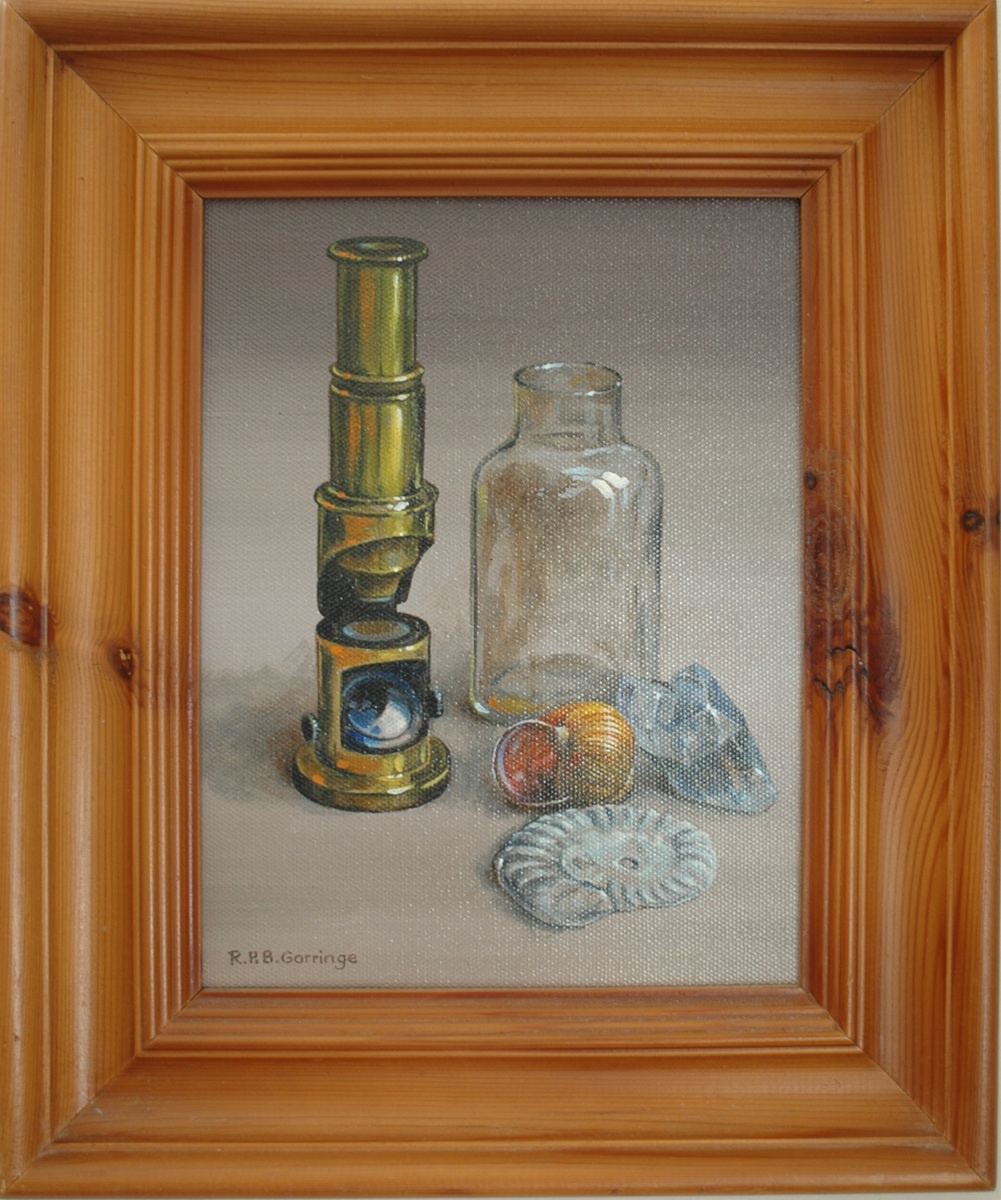
Having latterly acquired an oil-painting for the first time in decades, it only took me two more weeks to get another one. I had wondered what art might be on offer at ebay. What I found there was a bewildering variety of unappealing work at price points ranging from tens to tens of thousands of pounds. Among the affordable options were very few that caught my eye – but after browsing for some time a still-life painting did eventually give me pause for thought. It was listed in an auction starting at only about £45. Expecting to be outdone, I threw in a bid, and was surprised when it proved to be the only one.

The painting (Fig. 17) depicts five items: an antique brass microscope; an empty glass jar; a seashell; a piece of rock crystal; and an ammonite fossil. Unlike the last piece I bought there's a clearly legible signature: R.P.B. Gorringe. He, it seems, was a freelance illustrator and painter who also did some teaching. It's a small piece in a good frame that has improved a corner of my hallway. There's scant chance of my accumulating any fine art on my budget: I'm happy to have been able to expand my humble collection at relatively low cost.


I had not suspected that kora virtuoso Toumani Diabaté had recorded with bassist extraordinaire Danny Thompson, until reading about the album Songhai a few weeks ago. It's a record that they made with the Spanish flamenco ensemble Ketama in 1988. I was alerted to its existence via a list of notable nuevo flamenco records compiled by Noah Sparkes at Discogs. I ordered a second-hand CD copy, which arrived on Friday.

What a wonderful record! It's a joy to hear the interplay of influences from either side of the Mediterranean. The strumming guitars and the twangling kora are the obvious co-stars, with Thompson's bass oftener in the background than the spotlight. Here's some footage of this ensemble performing the album's opening track 'Jarabiu', in a live performance. And here's some more with just Diabaté and Thompson on stage. In '88, nuevo flamenco was having a moment with the worldwide success of the Gypsy Kings. Diabaté, meanwhile, was just beginning to build his international reputation. As for Thompson, his other engagements around that time included contributions to records by Richard Thompson, Sam Brown and Talk Talk.


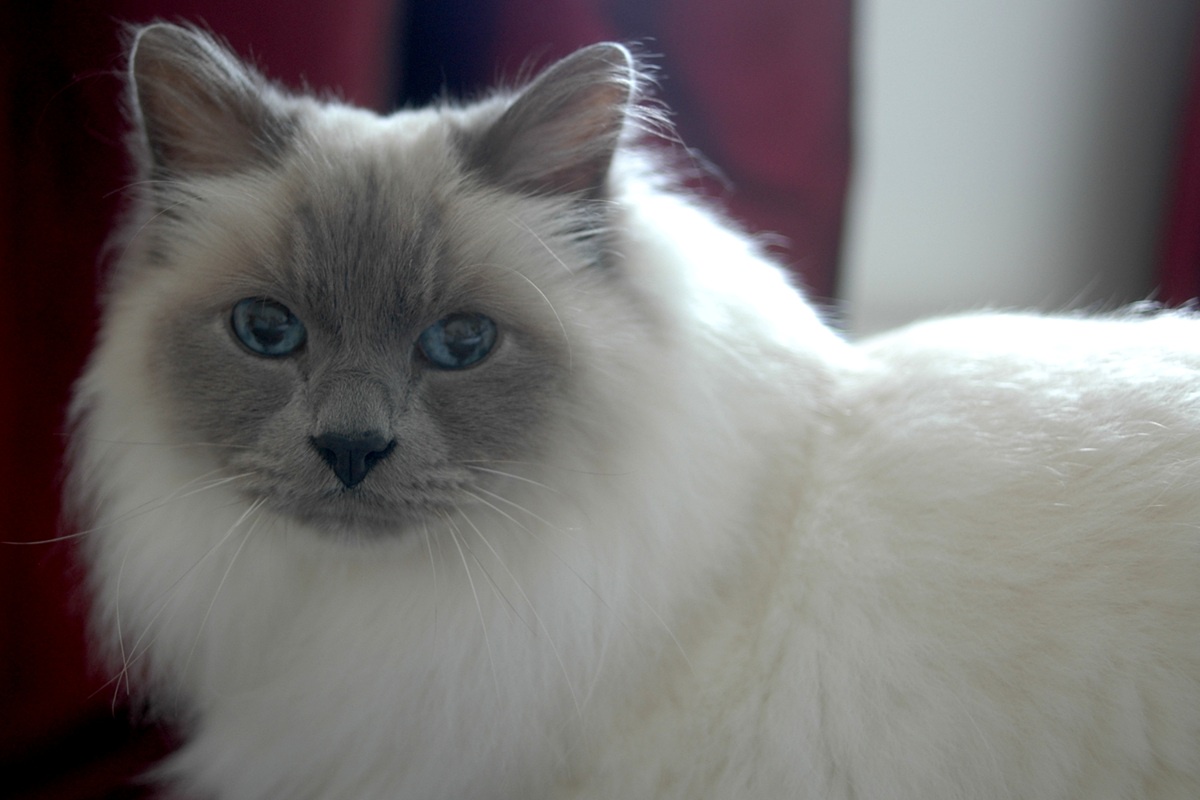
Murphy the cat reached the milestone of his eighteenth birthday on Wednesday. Although very much an elderly gent these days he still hasn't lost his good looks (Fig. 18).

Also on Wednesday, there came, just after dinner, the unmistakable sound (an enclosed descending flutter) of a bird falling down the chimney. Could it have been a sort of birthday offering for Murph from a well-meaning but misguided higher power? As it happened cat and bird did not meet, with the latter (fortunately uninjured) needing no prompting to leave as soon as I'd contrived to open up an exit route for it.

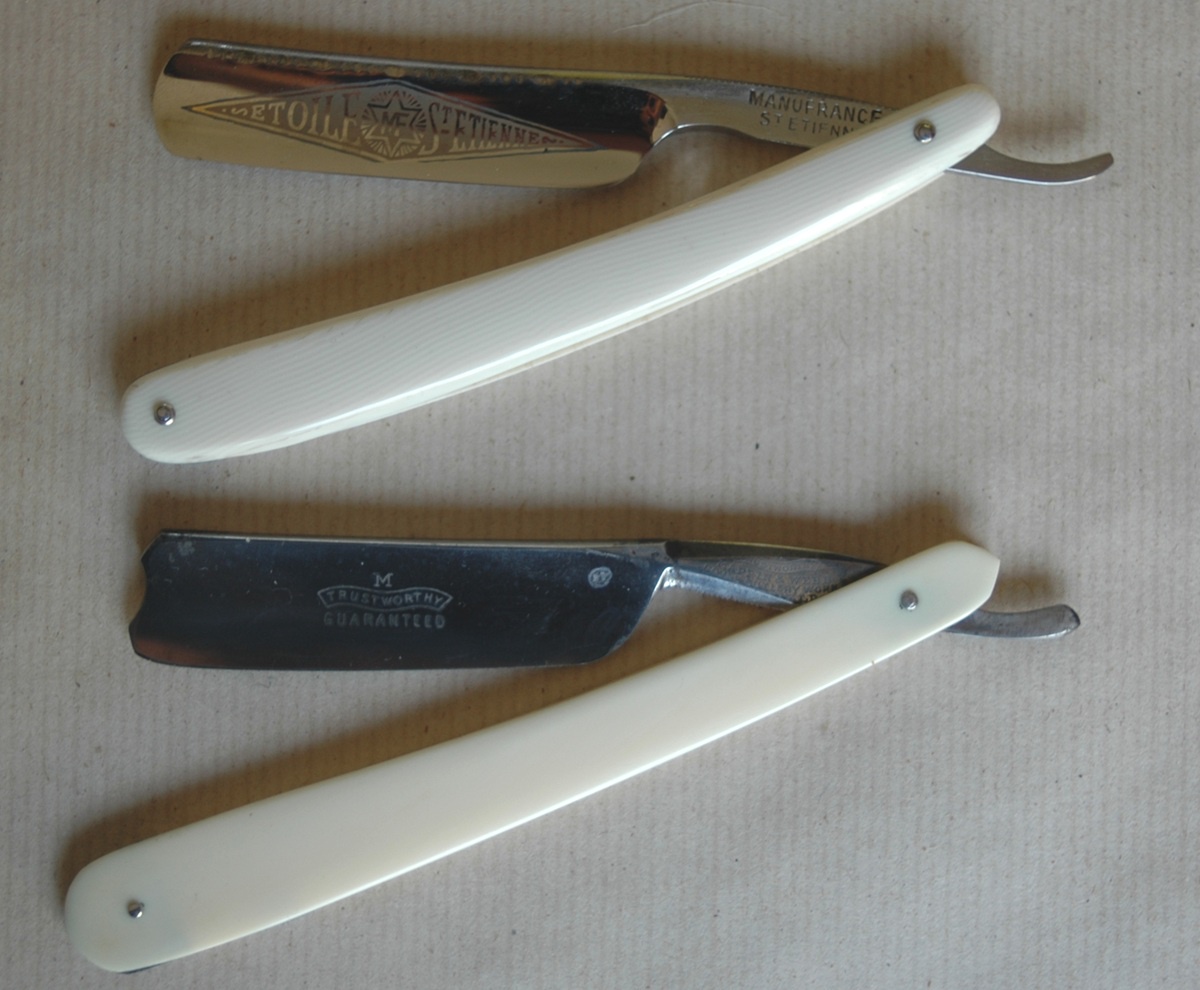
My intention to practice straight-razor maintenance using a whetstone has been undermined by acquisitiveness: I certainly don't need any more razors but have, under the alluring spell of Ebay and Etsy, bought some anyway. All too hesitantly just starting with proper upkeep, I'm by no means ready yet to put a shaveworthy edge on a blunt instrument received via an online order. In today's post were two such blades (Fig. 16) I’d sent out for expert attention last week.

One is an early-20th Century full hollow ground razor marked Étoile-St. Étienne on the blade and Manufrance St. Étienne on the tang; while the other is a mid-to-late Victorian razor with a thicker grind, a barber's notch, and the words Trustworthy Guaranteed etched on the blade, with Trustworthy, Mappin & Webb, Royal Cutlery Works… stamped on the tang.

Manufrance apparently pioneered catalogue-driven mail-order retail in France beginning in the late 1880s, selling all manner of (mostly) re-badged hardware, all of which, as per the name, was French-made. Mappin and Webb, meanwhile, had roots extending back into 18th-Century Sheffield, but it wasn't until 1862 that they were established as London retailers under that name, at length building a reputation as purveyors of fancy silverware and jewellery as much as for their cutlery.

If adding those two to my ridiculous shaving rotation wasn't enough, I still have yet to send off the pair of Joseph Rodgers razors I bought the other week.


New to me, found via Bandcamp, is the music of Canadian singer-songwriter Dominique Fils-Aimé. I've been enjoying to her new album My World is the Sun. It boasts beautiful singing over (mostly) sparse arrangements, with a slow & low nocturnal mood that reminds me slightly of some of Arooj Aftab's work. Try for example 'Going Home'.


People suppose I must be good at chess. Evidently I must look the part. In this regard, appearances are deceptive: my sense of strategy is weak; my killer instinct lacking. I gave up trying to play when defeat followed discouraging defeat without any sense I was improving. This was the case with both human opponents and virtual ones. In recent months I’ve played my first couple of games in over a decade, and, much to my astonishment, won them both: the latter of these was on Sunday. I bask in a short-lived glow of victory until my opponents inevitably re-group, improve, and overtake me.


Cheese of the week has been Abondance, a semi-hard French cheese made with unpasteurised milk, which has a depth of earthy savouriness that hits my palate just right. I like it as much as any Alpine cheese I've tried — though admittedly there are plenty I've still yet to sample.

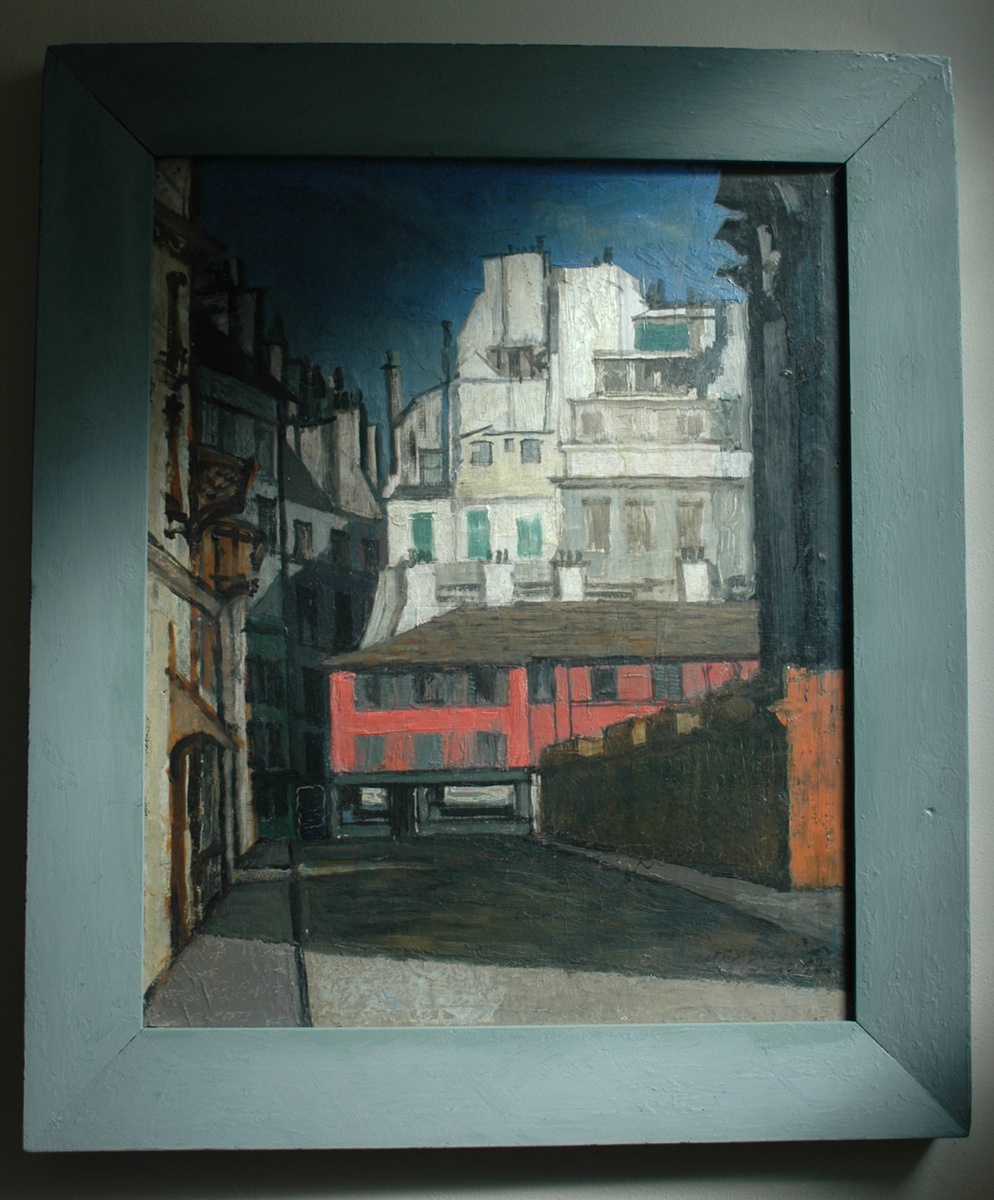
Until yesterday, it had been over twenty years since the means and opportunity last aligned such that I bought a painting. I'd been in Chepstow on Saturday morning, doing my usual rounds of the town's 'thrifting' locations, when, at the Red Cross charity shop I saw the walls lined with a dozen or more paintings and drawings. One in particular caught my eye — a street scene (Fig. 15) with a French look about it. The price was £100: high for a charity shop; not so high for a unique work of art. Unwilling to act on an immediate impulse, I decided to think it over.

Yesterday was a day off work. I'd been meaning to gather together a batch of records and CDs that had become surplus to requirements, and donate them somewhere. That somewhere, I realised, could be the Red Cross shop with the paintings. I dropped off the music and paid £103: for the painting plus a shirt I’d noticed while I was waiting for it to be taken down from the wall. The shop manager told me that the artworks had all come from the collection of a local ceramicist, who had been downsizing in advance of a move.

The painting is in oils or some other thickly-applied paint on a tatty old piece of board: there's some damage at its edges and at least one hole right through it. The frame is a somewhat distressed wooden one painted an unappealing shade of grey. The picture is signed and dated at the bottom right, though not altogether legibly. The artist's name was Peter S[omething] and the painting was made in (I think) '52. I've hung it at the top of the stairs, where a framed collage had previously been. I very much like how it looks there.


Elsewhere in Chepstow on Saturday I bought three '80s LPs for a tenner. These, I realised later, were linked by the letter 'L': the self-titled debut album by The Lounge Lizards; Will the Wolf Survive by Los Lobos; and Lyle Lovett & his Large Band. I was unfamiliar with all three but was happy to take a chance on them given their inexpensiveness. This was a trio that proved to be a decidedly mixed bag.

I'd seen or heard any number of mentions of the Lounge Lizards over the years without ever knowingly hearing a note of their music. On first acquaintance I really enjoyed the album: '50s jazz flavours served up with post-punk avant-garde attitude. An accomplished effort though it was, the Los Lobos record wasn't well-aligned with my current tastes and I didn't take a shine to it. As for the Lyle Lovett disc, it was a frustrating case inasmuch as I loved about half of it and disliked the rest: I may get a CD copy so I can more readily skip the tracks I don't care for.


I greatly admired Maria Stepanova's non-fiction opus In Memory of Memory when I read it a few years ago. Seeing a novel of hers (The Disappearing Act) has been newly published in English I thought I'd get a copy of it, and also try some of her poetry, in the shape of the 2021 collection War of the Beasts and the Animals. I read the latter (translated, like the other books, by Sasha Dugdale) on Wednesday and Thursday.

Inspired here & there by high modernism and dense with allusion, some of it felt opaque to the point of obscurity. Elsewhere were less forbidding poems based on ballads & songs, though some of those too came across like puzzles I couldn't necessarily solve. In short, although there were moments I could grasp and savour, I felt like its demands often exceeded my limited abilities as a reader.

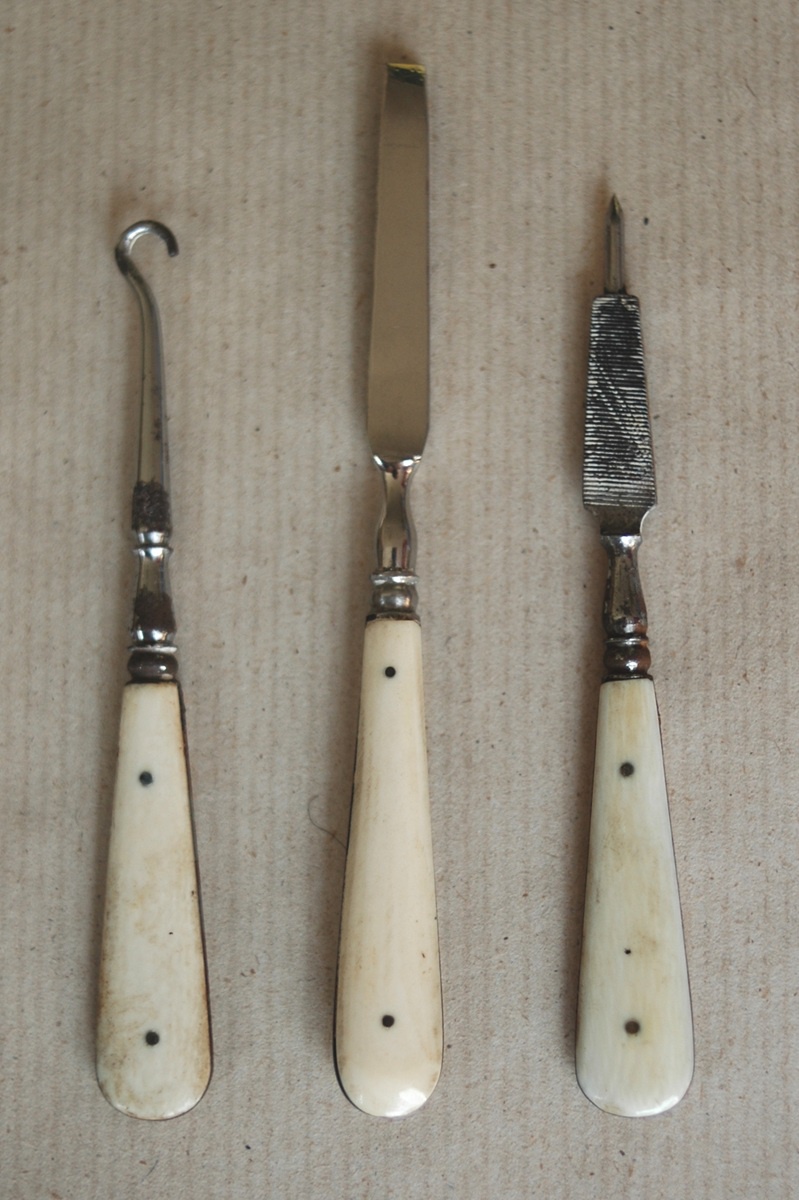
Via ebay I'd ordered a pair of late 19th-century straight razors that had been bundled with a trio of matching bone-handled grooming accessories (Fig. 14). From the pictures in the original listing I could tell that one of those extra items was a nail-file, but I wasn't sure about the other two. The parcel arrived on Wednesday, whereupon it became obvious that one was a pair of tweezers. The third still puzzled me until an online search suggested it was a button hook. In an era of zip and velcro fastenings I'm none too likely to ever need such a thing, but it's there now in case I ever do.


Another delivery courtesy of the same auction website came on Friday: a double LP set of orchestral music by Krzysztof Penderecki. This was a compilation on the Naxos label of six pieces from the uncompromising earlier end of the composer's oeuvre, issued back in 2013. I'd known about it for a quite some time but had given up on finding a copy after it had fallen 'out of print'. A little over-excited when I saw one for sale last week I spent £35 on it – as much as I've ever paid for a record that wasn't a gift for someone else.

Was it worth the money? Maybe. The recordings are excellent; and the mastering & pressing also very well done: the sound is vividly unsettling. The discs, moreover, are in near-pristine condition. I was already a fan of two of the works included: 'Threnody to the Victims of Hiroshima' (1961) and 'Fluorescences' (1961-62). And I'd heard some snippets of two of the others — 'Polymorphia' (1961) and 'Kosmogonia' (1970) — from their appearances on the soundtrack of Kubrick's The Shining. When played in full I was very impressed with the former, but cared much less for the latter: I'd have sooner seen 'De Natura Sonoris' (I & II) on side D in its place. The other two tracks were altogether new to me. These were the earliest and latest of the compositions on the album — I was in two minds about 'Anaklasis' (1959) at first hearing, whereas 'Intermezzo' (1973) made a wholly positive first impression.

I have some quibbles about the packaging. There are hardly any sleevenotes – just a few unhelpfully vague remarks in the gatefold and a pull quote from David Hurwitz on the back. A little information about each of the pieces and thumbnail bios of the composer and conductor wouldn't have gone amiss. Less forgivable is the complete absence of any text on the spine of the record. Admittedly, it won't be too hard for me to remember that the purplish spine filed between Orbison, Roy and Pentangle, The is this one, but it is an annoyingly fundamental design oversight.


Finished on Sunday – Good and Evil & Other Stories by Argentinean author Samanta Schweblin. I was puzzled by its title. None of the six tales in the book are called 'Good and Evil', thereby making all of them ‘Other Stories’. And nor did it seem to me that notions of Good and Evil were particularly prominent in the book. It has more of a focus on the eerie and uncanny, its various protagonists figuratively or literally haunted by their sadnesses & regrets. I liked it every bit as much as Schweblin's much-praised novella Fever Dream. Something about the moods it conjured up put me in mind of certain of Daphne du Maurier's better efforts.


The cheese of the week has been Taleggio. They had some at Lidl on Saturday. My first time trying it some thirty years ago had, as best I can recall, been my first ever encounter with a washed-rind cheese. On that occasion I was altogether unprepared for its forthright aroma. This time around I was ready, and have been relishing every morsel.

A relatively recent discovery for me has been the writing of George Saunders. Less than two years ago I belatedly came around to reading his excellent novel Lincoln in the Bardo. Since then I've also read Liberation Day (his latest collection of short stories) and A Swim in a Pond in the Rain (his book about reading and writing short stories) — greatly enjoying them both. The other weekend I picked up a nominally signed copy of his new novel Vigil from Rossiter Books in Monmouth – in which the 'signature' resembles a monogram more than a fully written-out name. Now I've read that one too, finishing it on Sunday morning.

Like Lincoln in the Bardo its setting straddles the line between life and death. Vigil's protagonist is Jill Blaine, one of the departed, who has found a posthumous vocation in providing solace and guidance to those struggling with the hard work of dying. The book begins with her arrival at the home of her latest, and most challenging charge – former oil-company supremo K.J. Boone. Little does she know that others of her kind have their own axes to grind with the moribund patient. Unlike the earlier novel, this is a short book, running to only 172 pages. Saunders' mastery of short-form fiction is much in evidence in a narrative well-stuffed with telling details. For me it was another very satisfying read, though I did wonder if the story's moral dimension may have slightly inhibited some of its characterisation.

After that, I read Karin Tidbeck's novel The Memory Theater in just a couple of days. At 221 pages it is likewise fairly short. This is an idiosyncratic and inventive work of fantasy with elements of folklore and fairy-tale. If it weren't for all the violence one might recommend it to older children on account of its charming lightness of touch (of course some children might like it because of the violence). It kept me absorbed and entertained throughout. Interestingly, Tidbeck, who is Swedish, wrote it in English. The implied off-stage demise of its antagonist, the memorably callous Lady Augusta Prima, seemed to leave an opening for her potential return in a sequel.


There have been a couple of new musical arrivals this week. On Friday a CD copy of Patricia Brennan's recent album Of The Near And Far arrived in the post. Her contribution on vibraphone to Mary Halvorson's ‘Amaryllis’ ensemble had impressed me, and led me to look for music with her name on it. I first bought her 2022 album More Touch. That one, however, I'd found pointily percussive in a way that tended to jangle my nerves, meaning I didn't listen to it often. What I'd caught of Of The Near And Far on-line suggested this newer album might be a more readily approachable one with some smoother surfaces. And, in general it is, though there are some more jagged moments too, especially on the track 'Andromeda'.

It's music apparently inspired by the night sky, with five of the seven tracks named after constellations and in various ways (explained in the booklet notes) musically inspired by them. As well as Brennan on vibes, there are parts for piano, guitar, bass, drums, live electronics and string quartet. Of the other musicians I was only hitherto familiar with the pianist Sylvie Courvoisier, whose album Chimaera I own. Both Courvoisier and Brennan are exponents of somewhat demanding jazz that is out toward the further edges of (and occasionally beyond) what I can enjoy. My mood isn't always right to sit down with this kind of thing, but, on the right day I do appreciate it. An example track: 'Aquarius'.

Left outside my door in the rain the following day a vinyl copy of the new album by The Olympians: In Search Of A Revival. Thankfully the record inside the wet cardboard was protected by plastic wrap. I'd come to the self-titled debut by the band only a few years ago, since when it's been one of the most frequent return visitors to my turntable. Here we have slices of more of the same only different – servings of high-quality backward-looking instrumental funk & soul that are a straightforward joy to hear. Hear, for example, ‘California’. Too often to buy new vinyl is to navigate a minefield of substandard pressings: I’ve had no such trouble with the Dap-Tone label and its offshoots, whose quality control I have found consistently first-rate.

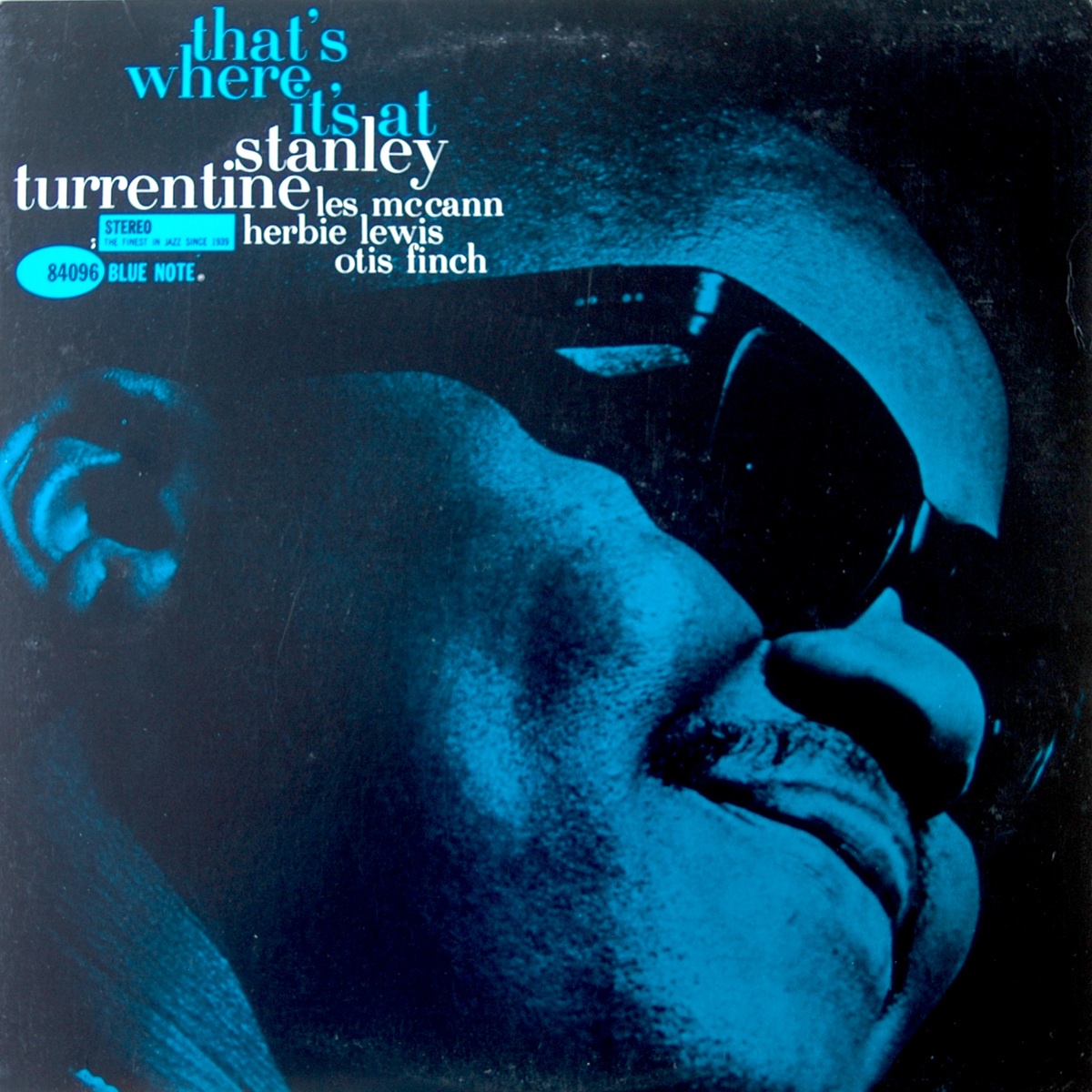
In Monmouth on Saturday morning, at 'The Vinyl Spinner' market stall, I bought two records: Promise by Sade and That's Where It's At by tenor saxophonist Stanley Turrentine (Fig. 12), the latter an '80s Blue Note re-press in very clean condition. Turrentine's Blue Note debut Look Out! has been a favourite of mine for some time (I have it on CD), and I've also enjoyed his contributions to classics such as Jimmy Smith's Back to the Chicken Shack and Kenny Burrell's Midnight Blue. On the other hand I've more recently found some of his later albums at nearby charity shops — Nightwings (1978) and La Place (1989) — and didn't much care for either of those.

I was glad to find That's Where It's At very much to my liking, having chanced £15 on it. The record also features Les McCann on piano, with Herbie Lewis and Otis Finch on bass and drums respectively. McCann is credited as writing four of the six tracks, with the remaining two numbers Turrentine compositions, one by Stanley, the other by his trumpeter brother Tommy. It's all eminently suitable for late evening listening – try 'Soft Pedal Blues', for example.


Finished in quick succession this week, two volumes of short stories: The Coiled Serpent by Camilla Grudova and Uncertain Sons by Thomas Ha. I'd loved Grudova's debut collection The Doll's Alphabet but then disliked her novel Children of Paradise. Would The Coiled Serpent be a return to form? For me, it was not. Grudova has a ready way with conjuring up an air squalid grotesquerie: there are filthy homes; dismal workplaces; decrepit institutions & insanitary bathrooms. Too often though, there's precious little else, with characterisation & plot taking a back seat to a miasma of malaise. “Madame Flora's”, the longest of the stories, stood out for me as the best of a generally unimpressive bunch.

While no few of the stories in The Coiled Serpent have fantastical or horrific ingredients, it's marketed as literary fiction. Uncertain Sons, Thomas Ha's debut collection, though sold as genre fiction, outdoes Grudova's volume as literature in some respects. It has stronger plots, better-drawn characters, and a more affecting emotional payload. Which is not to say it doesn't work from a genre standpoint as weird horror, tinged here & there with sci-fi and fantasy. My favourite of the tales in it is 'Balloon Season'. At times the style felt overly 'cinematic' for my liking, but, even if not perfectly aligned with my tastes, I enjoyed the book very much.


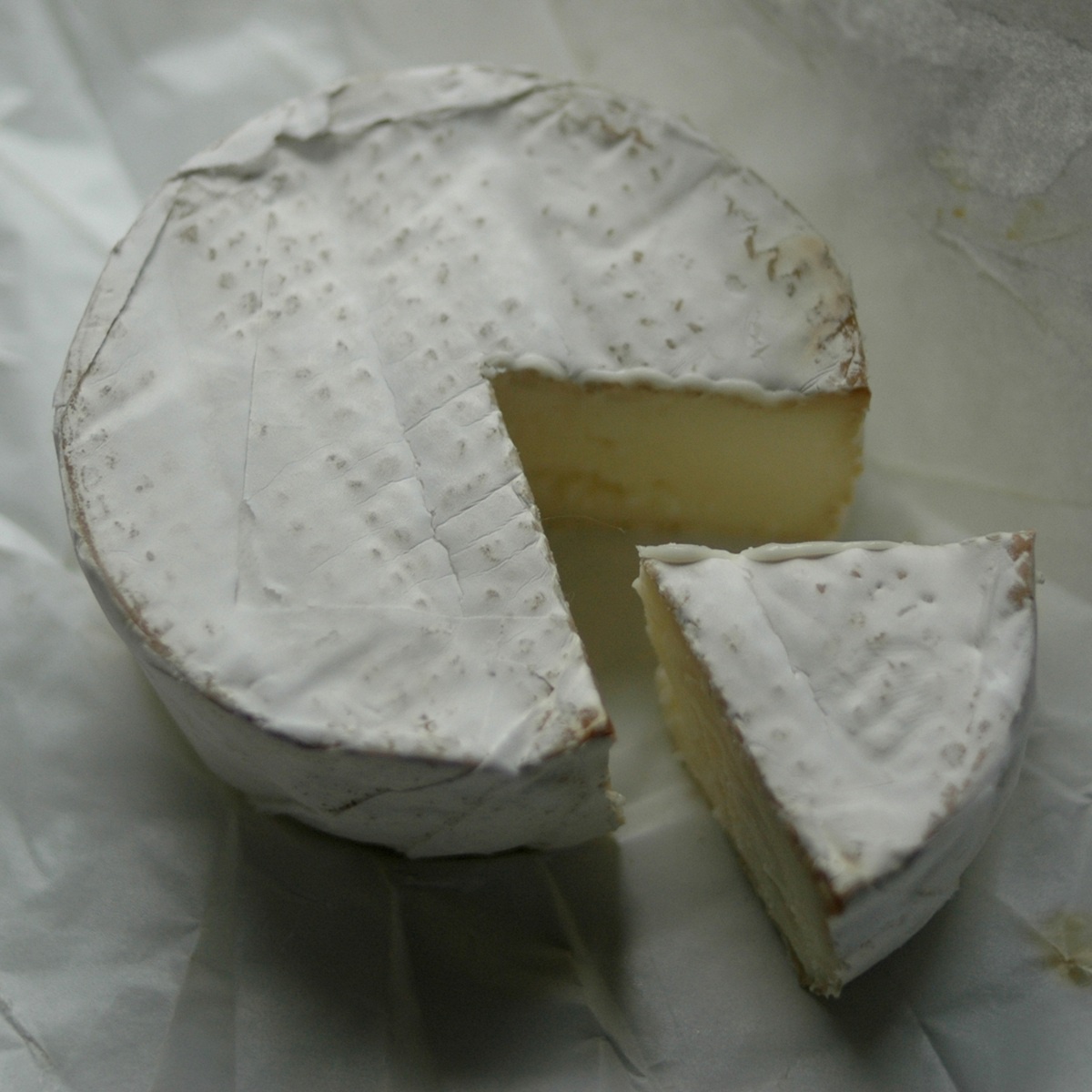
The cheese of the week is Wigmore (Fig. 13), a semisoft ewesmilk bloomy rind cheese made in Berkshire. “Wigmore has a complex and fruity richness with a delicate texture” goes their blurb. I've not discerned fruitiness in it myself, but there is certainly richness and complexity aplenty: I love the stuff.


In a fortune cookie today “The star of happiness is shining on you”. Obscured by clouds, however.

I was all of nine years old when I first heard Blondie on the radio and first saw them on TV. Like many others of my generation I was fascinated by Debbie Harry. It's an appeal that still hasn't altogether faded: even now I have a couple of Blondie LPs on my shelves & half a dozen of their 7” singles. On Wednesday, I finished reading Harry's 2019 memoir Face It. I had been mildly curious about the book when it came out, though not quite so curious that I didn't mind waiting until I found a cheap second-hand copy of it somewhere. Not until the other weekend did one turn up: at the Oxfam shop in Chepstow. The asking price was a reasonable £2.99.

As is very often the case with celebrity autobiographies, it's not entirely the subject's own work. At least in this instance there's no hidden ghost-writer: a line on the title page states up-front that it's “in collaboration with Sylvie Simmons and based on a series of recent exclusive interviews.” There is very much the feeling that the story is told in Harry's own words, but, perhaps because of the collaborative composition, one feels at times not quite fully on-board a first-person narration. It's no masterpiece, but there is plenty of interest even for the casual fan. For me, the most absorbing chapters were the ones tracing the singer's pre-fame progress through various bohemian milieux in late '60s and early '70s New York. Among the illustrations are many portraits of Harry sent to her by fans: these provide a intriguing counterpart to the numerous snapshots of the almost invariably photogenic chanteuse.


In today's post, a CD including a selection of Philip Glass's Etudes for piano, performed by the Dutch pianist Feico Deutekom. For what are relatively recent compositions, there are a good many different recordings out there. Indeed, I used to own the composer's own renditions of the first ten Etudes. I didn't hold on to that one as I didn't like all ten of the pieces, and there was sometimes the sense that Glass was playing near the limits of his ability. Deutekom's versions appealed precisely because they weren't a complete set. I gather Vanessa Wagner's recent recording of all twenty pieces has been hailed by many as the best yet, and I was tempted to acquire that version. My suspicion, though, is that ca. two hours of Glass on solo piano, no matter how well-executed, is likely to be just a bit too much for me.

I wonder if Phil and Debbie ever crossed paths in the early '70s. Might Debbie have served Phil a drink in one of her waitressing jobs? Might Debbie have hailed Phil's taxi when he was a cab driver?


The cheese of the week has been Roquefort. I bought a wedge from the Newhall Farm Shop on Saturday. I'd long been resistant to the allure of blue cheese until my first encounter with Roquefort about nine months ago. I had wondered if a sheepsmilk blue might have any more appeal than the cowsmilk ones I'd hitherto disliked. Not only did I love it at first taste, it opened the way for me to be able to appreciate the likes of Stilton and Gorgonzola, that I had previously disdained.

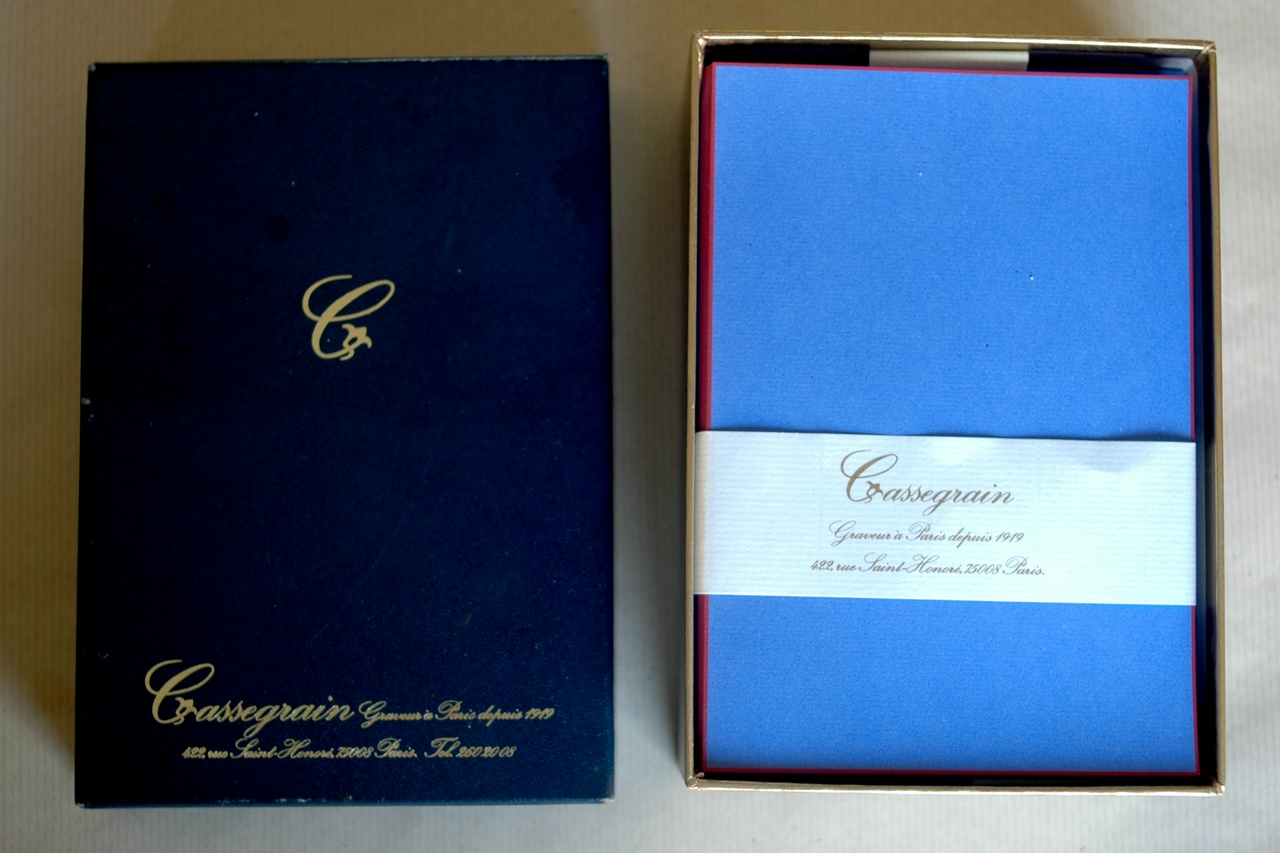
In the post on Wednesday the latest set of vintage stationery arrived to add to my haphazard collection: a box of Cassegrain paper and envelopes (Fig. 10). It contains all but a few of the original complement of a hundred sheets of laid paper in an almost impractically deep shade of indigo blue, edged on one side in burgundy; and, beneath them, the same number of matching envelopes, all lined with white tissue. The paper is a non-standard 129mm x 186mm: between A5 and A6; slightly smaller than the old British 'Duke' size. The sheets are relatively lightweight, with no identifying watermark. Having never seen anything quite like it on ebay before, I talked myself into paying nearly £30 for the set. The seller claimed it to be at least fifty years old. I'm looking forward to writing some letters on the stuff!

Cassegrain was a shop on Rue Saint-Honoré in Paris where the likes of diplomats and duchesses, fashion designers and film-stars once bought their deluxe personalised stationery. The nearest equivalent in the UK would be Smythson. A '90s article in Le Monde names Gregory Peck, Faye Dunaway, Lauren Bacall and Harrison Ford as among Cassegrain's clientele. Founded in 1919, the shop's main business for many years was in the bespoke engraving of letterheadings, business cards, invitations and so forth. A family business until 1978, retail became more of a mainstay after the shop's acquisition by its first corporate owners. In the Le Monde article there's reference to it stocking some three hundred kinds of paper, each, implausibly, more luxurious than the last. Alas, the shop seems to have closed ca. 2010 – albeit with a successor of sorts in Armorial, now on Ave. Victor Hugo.


As a collector of old writing paper, the helpful on-line resources I've found have been few and far between. One useful source of information has been the scanned copy of the 1923 Phillips Paper Trade Directory of the World at the Internet Archive. Specifically, its section on “Water-Marks and Trade Names” has helped me out on a number of occasions. Finding a later edition (the one for 1948) of the Directory on sale via ebay, I thought I'd order it. The book arrived this afternoon (Fig. 11). Alas, by 1948, the “Water-Marks and Trade Names” section was evidently no more. With luck I'll find something else within to make the purchase worthwhile. On an initial browse through the volume I spotted one sign of the times in the section about Germany: “We would point out that we have received no replies to our questionnaires regarding mills in the Russian Zone”.


I'd been procrastinating and hesitating about trying a recently-acquired Shapton 1200 whetstone to re-finish the edge on one of my straight razors. Yesterday I had a first attempt, with an initial test shave with the same razor following earlier today. While I'd like to say it was a great success, I can only claim that I don't seem to have made the edge any worse than it was before. Second and probably subsequent attempts will be necessary.


I feel like it might be beneficial for my musical well-being to spend more time perusing what's on offer at Bandcamp. Visiting the site yesterday I very much liked what I heard of the album To Be Loved Back by North Ingalls. “This talented septet drape tender folk melodies in homespun, R&B-inflected grooves” says the blurb there. Here's a YouTube clip of the band performing their song ‘Jonni’.