Tuesdays in Autumn

I don't enjoy browsing through the vinyl selection in my local charity shop as much as I used to now that it contains quite so many records that I donated there years ago that seem to be in no danger of ever being sold. To go there is to be confronted anew with past regrets. Still, they had one LP that caught my eye on Saturday morning: Genuine Dud by the Dudley Moore Trio. This was an original '66 pressing in very good condition with a slightly distressed sleeve (Fig. 9). It cost me £2.50.

Moore's success as a comic writer and performer overshadowed his considerable pianistic talent, but meanwhile must have helped enable the release of the several recordings he made with his trio. The first of these was The Other Side of Dudley Moore, released in 1965, with Genuine Dud coming next, seeing daylight the following year. On both LPs his bandmates were Pete McGurk on bass and Chris Karan on drums. It's a well-recorded slice of amiable piano jazz, with seven more or less familiar standards plus two of Moore's own compositions. There are ballads, blues and bossa nova numbers: try their take on the Kern/Harbach tune ‘Yesterdays‘ for example.


I'm not well-versed in the subgenre of dark fantasy, though I have dabbled a little along its more literary frontier. At the weekend I finished something that was a bit more of a page-turner in the shape of Asunder by Kerstin Hall. I had bought it as a gift for someone else before a late change of plan left it with me. Rather than try to return it I thought I may as well read it myself. I found it worthwhile & absorbing, set in a well-imagined and plausibly ‘lived-in’ world with intriguingly alien religious traditions that neatly informed the magic, technology and politics at play in the story. In certain other respects Hall was content to leave her world more like the real one. The characterisation was pretty good, and the conventionally-structured plot kept things moving at a steady enough clip. Personally I’d have preferred a proper ending over a sequel-friendly one, but I know that the market for this kind of fiction tends to demand series more than standalones.


Cheese of the week: some Manouri, bought at Lidl. It's a whey-based cheese made in Greece from sheep and/or goatsmilk, apparently a by-product of feta production, but a subtly delicious foodstuff in its own right. As it says here “Manouri has a firm texture, a rich, buttery flavour with mild citrusy notes and a milky aroma, it’s less salty than Feta and creamier than Halloumi.”
One of the reasons I revisited If On a Winter's Night a Traveler recently was that I was keen to read the recently-published novel Your Name Here – by Helen DeWitt and Ilya Gridneff – which I'd gathered was somewhat similarly self-referential. I finished the latter on Thursday having liked it much less than Calvino's book. Its opening chapters irritated me enough that I strongly considered abandoning the thing within the first hundred pages. On page 18, for example: “you are still trapped in a pastiche of the ultimately unsatisfactory If on a winter's night a traveler…” while I was feeling significantly more dissatisfied with the book in hand. As it happened, I had a cold, and was having some difficulty sleeping, so ended up mechanically plodding through long sections of it while sleepless and unwell. I finished it on Thursday. It didn't all strike me as equally bad, and, to be fair, it does also contain less dismissive references to Calvino; but it's not a book I'll be recommending to anyone, and my copy will be appearing at a nearby charity shop in the near future.

I understand that Your Name Here took shape about twenty years ago, failing to find a publisher willing to accommodate its eccentricities at the time. One thing it does very well is to embody and exemplify the early-to-mid-'00s more convincingly than anything else I've ever read. It positively reeks of the interval between 9/11 and the financial crisis of '08. While this is impressive in its own way, it did very little to assuage my negative feelings about the text as a whole. To enjoy it, one would have to appreciate the contribution of Ilya Gridneff significantly better than I did. Apparently, Gridneff was, when it was written, a globetrotting tabloid journalist whose freewheeling stream-of-consciousness emails (examples of which are scattered throughout the book) evidently impressed DeWitt no end: she often states as much and has some of the characters in the book agree with her. Meanwhile I found them irritating and tedious. It’s a tricksy mess of a novel that left me altogether dissatisfied.


Also finished this week: Saltwater Mansions by David Whitehouse, a non-fiction story about the author's fascination with the enigma of a woman's disappearance from the titular address – an apartment-building in the seaside town of Margate. Whitehouse recounts what little anyone knows about the vanished woman's life, interpolating stories about various people he meets along his way to a partial resolution of the mystery. It's a work that seemed to me to fall a little short of its potential, but even so I found it a good read overall: one which held my interest throughout. And, barely an hour ago, I got to the end of A Short Stay in Hell by Steven L. Peck. A blurb on the back of the calls it “a perfect blend of science fiction, theology and horror”. I wouldn't go that far. It's a well put-together novella that I suspect would have had more impact had I not already dwelt so much on the subject of horror infiniti.


Making a cup of herbal tea last Tuesday something went wrong within my ten-year-old kettle that led to the house's main trip-switch leaving me in the dark. A tentative second attempt in another outlet brought about the same outcome. This had been an inexpensive temperature-control kettle. Seeking a replacement I bought a less inexpensive one with the same feature: the Sage Smart Kettle™. Fortunately its 'smartness' is strictly limited to having a few buttons to set the temperature: it doesn't connect to the internet; nor does it allow voice operation via Alexa, or her ilk – unlike other kettles I could mention.

A coffee-table book called Jazz Covers came into my hands recently. As the title implies it brings together many jazz LP sleeve designs – not only the usual suspects like Reid Miles' covers for Blue Note, but all manner of other labels' offerings too. Among these were many records I didn't know and hadn't heard, a small subset of which were recordings by jazz singers I'd previously been unaware of. Checking out some of these vocalists via YouTube, I took a particular shine to one of them: Lorez Alexandria. An order for a used CD copy of her 1964 album Alexandria the Great (the one illustrated in the book) soon followed, and the disc arrived on Thursday. I greatly enjoyed listening to it.

The singer, whose given name was Dolorez Alexandria Turner, had a warm contralto voice, with diction and phrasing sometimes reminiscent of Shirley Horn's – albeit with a darker-hued, smokier tone. On Alexandria the Great are a few big band numbers, with the remainder of the songs incorporating trio or quintet accompaniments including such notable musicians as Wynton Kelly and Paul Chambers. Three of the tracks are Loewe-Lerner compositions from 1964's hit musical movie My Fair Lady. Among the others is an idiosyncratic take on an earlier soundtrack stand-out, ‘Over the Rainbow’. For an example of her style, how about listening to 'I've Never Been in Love Before'.


In Thornbury on Saturday I added yet another charity shop overcoat to my collection, this one a three-quarter length garment in mid-grey wool by Guards, a brand that is still part of a going concern. With 'Made in England' on its label, I'd imagine this one is likely of 20th-Century vintage. I've accumulated ten or so overcoats now, from a smart full length but relatively lightweight navy blue Crombie coat good for cool spring and autumn days, through a snugly warm Burton houndstooth coat (which, if the 21.12.61 on a quality control label in its pocket is really a date, is seven years my senior!); to a ridiculously large and heavy Chester Barrie coat I reserve for the very worst of weathers. I feel lucky to have the luxury of abundant choice in the matter of outerwear.


After coming in to the new year with a cold I had all of a day and a half of feeling just about recovered – before succumbing to a second winter virus, which is in full effect now.

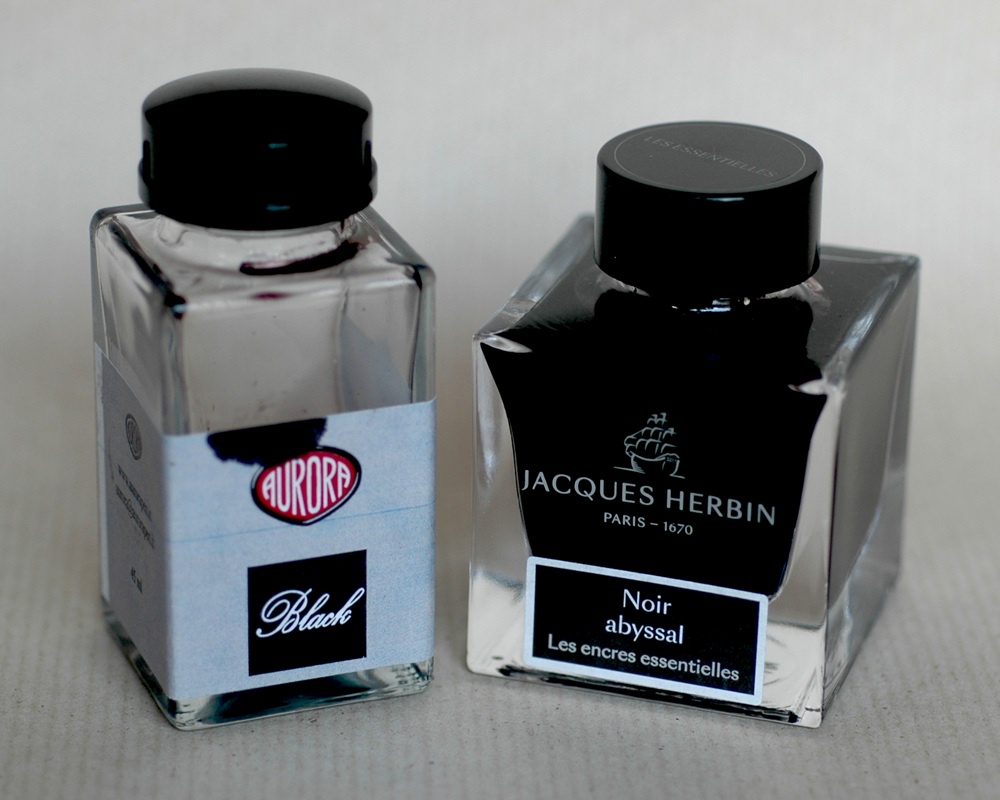
Black fountain pen inks come with a variety of descriptive names: Onyx Black; Black Ash; Jet Black; Black Pearl; Velvet Black, and so on. In an effort to suggest 'none more black', J. Herbin have come up with the name Noir Abyssal for the black ink in their les encres essentielles line. While it sounds impressive, it isn't the blackest ink one can buy, and doubtless actual abysses can outdo any ink in the depths of their darknesses. A bottle of it arrived here on Wednesday. While I've yet to fill a pen with it, I'm confident it will be quite black enough for my workaday note-taking needs. I shall strive not to gaze too long into the ink lest the ink gaze back.

I had originally intended to order a different ink. I've been a satisfied user of the Italian-made Aurora black ink for years. Aurora were long known for making ink in only two sober colours: black and blue-black, with both being excellent if somewhat costly exemplars of those shades. Since my last re-order, however, things have evidently changed. They have a re-designed bottle, and there is now a range of ten colours. While the new range does not exclude black, I was unable to find any in that shade on offer at the UK stockists I tried. Reading someone claim on-line that Noir Abyssal is very similar to Aurora black, I resorted to ordering some of that instead (Fig. 8).

J. Herbin's regular Perle Noir retails for about £10 for a 30ml bottle; whereas Noir Abyssal is ca. £30 for 50ml, making the latter, drop for drop, roughly 1.8 times more expensive. It may be slightly blacker but I'd imagine most of the extra cost has gone to the fancier, heavier bottle, more strenuous marketing, and a wider profit margin. What can I say: it worked on parting this fool from some of his money – and I do like the look & feel of the bottle.


By way of my Christmas wish-list I was given several albums on CD including three more from my current favourite record-label International Anthem. These were: the first Fly Or Die offering from the late jamie branch, et al.; Off The Record, the new set of four EPs by Makaya McCraven and collaborators; and How You Been, the second record by SML. These have joined other CDs by the same artists already on my shelves. All have hit the spot and I’ve been giving them second/third listens over the past week.


The cheese of the week has been Clawson Farms 1912 Golden Blue, an agreeably mellow and Stiltonesque number.

Reading Italo Calvino's If On A Winter's Night A Traveler for a second time thirty-two years after the first, I was heartened by how little of it I had remembered. A vague sketch of the concept had stayed with me, along with the name 'Ludmilla', among no more than a handful of other details. I dislike revisiting narrative fiction when my recollection of the story is too clear, and probably would not have finished it again had too many other particulars felt familiar. It is a book with several unrelated, deliberately truncated plot-lines, which would be harder (I imagine) to recall than a single narrative arc. In any event, I reckon three decades is at last a long enough interval after which I could profitably reacquaint myself with some of the other novels I read in my twenties.

In a text concerned with reading in so many of its guises, it's no surprise that re-reading gets a mention, as in the following view voiced by one of the library patrons in Chapter 11:

“I, too, feel the need to reread the books I have already read [...] but at every rereading I seem to be reading a new book, for the first time. Is it I who keep changing and seeing new things of which I was not previously aware? Or is reading a construction that assumes form, assembling a great number of variables, and therefore something that cannot be repeated twice according to the same pattern? Every time I seek to relive the emotion of a previous reading, I experience different and unexpected impressions, and do not find again those of before [...]“

The impressions experienced on this encounter with the novel were just a little less favourable than those from my first. The sense of novelty that's part of its charm was unavoidably diminished, and I suspect I'm a fussier and more impatient reader in general nowadays. I felt some of the later chapters stretched their conceits too thinly, and that a couple of the nested narratives were a little weak. It doesn't speak well of my younger self, moreover, that I was so oblivious to Calvino's sexism back in the '90s. For all that, I've seldom – if ever – met with such buoyant & inventive writing about reading as I enjoyed again here.


Catching up with some reading this week I also finished George Saunders' examination of the art & craft of short-story writing – A Swim in a Pond in the Rain – which I much admired even if it did little to lessen my antipathy for the works of Anton Chekhov, one of the four Russian authors examined at length within. And I read Barley Patch, a first and perhaps last encounter with the work of idiosyncratic Australian Gerald Murnane. I'd had my apprehensions that his writing might not be to my taste, and indeed it wasn't: there were undoubtedly striking images and illuminating insights to be gleaned, but, for each such pay-off, there were too many pages of dogged pedantry to slog through for my liking. Beyond that, I simply didn’t much care for Murnane’s authorial company.


Wine of the week: Graham's 2020 LBV Port. While my usual taste is for a drier beverage, port has undeniable appeal at this time of year. A couple of glasses were a welcome treat on Saturday. I have to hope the head-cold that has taken hold since then doesn't linger, and I get to savour some more soon.

At the Oxfam in Monmouth on Saturday they had several flamenco LPs, of which I bought two: Flamenco Guitar and Flamenco Guitar vol. 2 by Ricardo Baliardo aka Manitas de Plata ('little silver hands'). These were 1966 releases in mono on the Philips label. The recordings had been made in Arles, France, in '63, and first issued in the U.S. in '65. The guitarist had not, before then, authorised any commercial release of his playing. As well as his guitar one hears Manitas' voice on a few of the tracks, as well as the voices of his cousin José Reyes and son Manero Baliardo. These additions have tripled my flamenco collection, which previously only included a single Paco de Lucia LP.


Sunday evening I enjoyed my first raclette-based meal, with the cheese melted at the table in a special-purpose raclette grill. To my mind this was a better means of distributing molten Alpine cheeses than a fondue.

Raclette, good as it was, has to share cheese of the week honours with the piece of Montgomery's Mature Cheddar I picked up from the Marches Deli in Monmouth (who have done remarkably well to re-open so soon after the damaging floods there last month). This is a dense, dry, richly savoury cheddar with mellow fruit and nut notes. My slice was also adorned with a few veins of blue mould, imparting some further complexity to its flavour.


I finished reading Arturo Pérez-Reverte's first novel The Fencing Master yesterday (in Margaret Jull Costa's translation), and felt well entertained by it. Had I not found it so engaging its flaws might have bothered me: the characters are all more or less stereotypical; the story takes some time to build momentum; there was one turn of the plot that struck me as highly implausible. On the plus side, it was well-written and commendably concise. Moreover its setting (Madrid in 1868) was well-realised; and the tangled political background underlying the book's events was neatly and unobtrusively sketched. It's a tale in which the titular fencing master, an old-fashioned, upright (and uptight) man in his later fifties has his world upended when an enigmatic young woman asks him for a course of lessons, thereby unwittingly drawing him in to a dangerous web of intrigue and betrayal.

Deployed on the back of my second-hand copy is a blurb calling Pérez-Reverte “The thinking man's Robert Ludlum”: were there any would-be readers actually flattered by that line? It led me to wonder, who, if anyone, might nowadays be styled the thinking man's Dan Brown? The thinking woman's Colleen Hoover?


Having forgotten a few items on Saturday I returned to the supermarket early this morning: it was alarmingly busy even at 06:45. My condolences to those who had to visit later.

Early December must be one of the least propitious times of the year for reading. There always seems to be far too much else to do. Only this evening have I reached the end of a short novel started a few weeks ago: Audition by Katie Kitamura. A correspondent's recommendation had made me curious to read it.

It's a story that struck me as very satisfyingly ambiguous. The narration had a clean, polished surface, which nevertheless gave the impression of considerable depth yawning beneath. Just about every small expectation that came to mind about where it might go next was soon afterwards neatly confounded: seldom did I feel sure of where I stood. It's a book that says a good deal and suggests a great deal more within its relatively narrow span of 197 pages.


The week has largely been taken up with work and with Christmas shopping. I left my annual campaign of on-line festive consumerism inadvisably late this year, and catching up has felt onerous. There have been lengthy sessions switching between browser tabs in search of appropriate items. There has been a barrage of notifications about orders and deliveries. There have been parcels to collect; parcels brought to my door; parcels left outside my door; parcels left outside neighbours' doors. Items damaged in transit or bought in error or subject to buyer's remorse have had to be returned. There have been second thoughts and changes of mind, and items at first intended for one recipient now earmarked for another. Even then, there is at least one item I know I will regret giving. There has been a rapid depletion of funds; a faint nausea about the excess of it all. I have to draw a line under it all now even if some dissatisfaction remains. Only gift-wrapping, distribution and presentation are left to manage.


The last time I'd tried blue cheese before my belated acquisition this year of a taste for the stuff, it had been in the shape of some Stilton four or five Christmasses ago. That experience had not been a happy one, and the recollection of it had pushed Stilton some way back in the queue of the cheeses I've wanted to try since my 'conversion'. Fortunately, having now seen the blue light, I have come back to it, and I'm finding the wedge I bought at Tesco on Saturday very much to my liking.


Wine of the week: a somewhat costly but very delicious Manzanilla Pasada, which is “delightfully aromatic with reminiscences of green apples and the characteristic hint of sea breeze.”

I dreamed, in my youth, of having a fancy hi-fi system like the ones I saw in catalogues and magazines. Only in my later thirties did I acquire most of the requisite components, and even then another long while passed before I finally set up, in time-honoured fashion, a turntable, CD player and tuner all wired together via an amplifier to some speakers. By that point, streaming was already becoming the norm, and the set-up I'd wanted for so long was somewhat passé. Despite that, I've stuck stubbornly with this old-fangled approach over the past decade. While generally unable, financially, to stray too far from the entry-level, I've been happy enough making do with the lower-end and the second-hand. Fortunately, I haven't been cursed with an audiophile's ear: my hearing, never the most acute, is worsening with age, aggravated by the continual ringing of tinnitus.

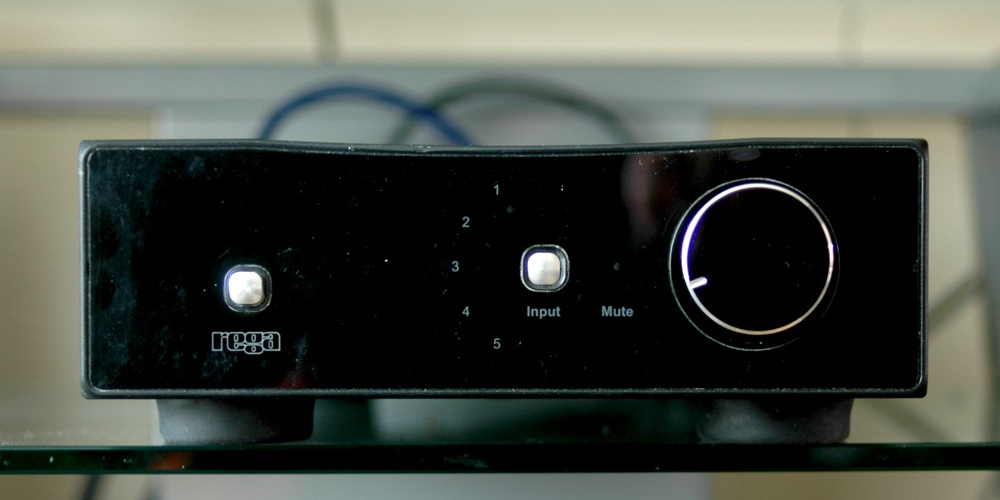
The weakest link in my hi-fi chain has tended to be the amplifier. Lately, the early '00s Rotel amp I'd bought post-pandemic had been showing every sign of giving up the ghost. I didn't feel it was worth getting it fixed, and pondered obtaining something new for once, before eventually settling for a pre-enjoyed Rega Brio-R (Fig. 7). This was a model launched in 2011, so presumably the one I ordered (which arrived on Thursday) must be about 10-14 years old. It appears, at least, to have been well looked-after. Several enthusiastic on-line reviews of the model had reassured me that I'd made a decent choice; as, meanwhile, the viewpoints of detractors in forum posts provoked doubts.

It's a compact unit with a bare minimum of controls: two buttons and a volume knob. Despite the uncluttered facade, its designers somehow managed to make the layout look a little awkward. I'm not sold, moreover, on the company logotype below the on/off button that's illuminated by a red LED. To my eye the latest iteration of the Brio looks neater. All of that is academic of course, as I'm listening to the thing and not looking at it. Whatever its objective merits may be, I'm finding it makes most of my music sound good enough, and that it suits my modest needs well enough. It would be nice if it keeps working a bit longer than the last one.


Another outmoded phenomenon: the Christmas card. I still send a couple of dozen of them every year, and receive a similar number. The first of this year's reached me on Saturday, after I'd sent out an initial batch to overseas recipients the weekend before.

On first hearing Black Country, New Road: I didn't like them at all. Their early material grated on my ears, and I never even gave their much-praised second album a listen. Despite myself, I caught a track or two off Live From Bush Hall that YouTube served up to me some time after its release, and I was obliged to concede I liked what I heard. Evidently a re-evaluation was in order. By the time Forever Howlong came out earlier this year I was all aboard, and bought a CD copy. Annoyingly, Live From Bush Hall isn't readily available as a silver disc (unless one gets the costly Japanese release) so I resorted to obtaining it on vinyl a few weeks ago, since which time it has returned to the turntable multiple times.

With a handful of exceptions, I never much cared for original ‘70s prog-rock, so don’t know why it should be that I greatly enjoy some 21st-Century music — such as Black Country, New Road — that is indisputably proggy.


I've been shaving with straight razors for nearly five years now, but have yet to attempt any razor honing. Some of the razors I bought came shave-ready; the others I sent off to be honed. Since then I've been maintaining their edges with periodic recourse to abrasive 'strop pastes'. The time has come now, I feel, to at least try honing on a whetstone, and, to that end, I'm hoping to get a Shapton Ceramic #12000 stone. I'm by no stretch of the imagination a handy person, so there's no guarantee it'll go well.

In the meantime, as of Saturday, I've come into possession of a honing stone that used to belong to my maternal grandfather. It's a drab green-grey slab embedded in a hefty block of dark wood (Fig. 6), that smells very much like it has spent the last half a century in a garage. I'll try my luck with the Shapton first before putting a sharp edge anywhere near this thing, but I should like to put it to use eventually.


The cheese of the week has been Perl Lâs, which I suspect must be the best-known blue cheese made in Wales: a renown, I would say, that is well-merited. Other mild blues I've taken a shine to lately have been Cashel Blue from Ireland and, from France, Bleu d'Affinois.

On Saturday I picked up a few LPs at the most reliable of my record-buying haunts. The best of them was The Comedy (1962) by The Modern Jazz Quartet, a colourful suite of tunes inspired by the Italian commedia dell'arte. It's a record (Fig. 4) that showcases the quartet's European influences. While enjoyable, it's a little light on the soulfulness that underpins their best work. It's interesting to contrast this record with its moodier follow-up, Lonely Woman, issued later the same year.

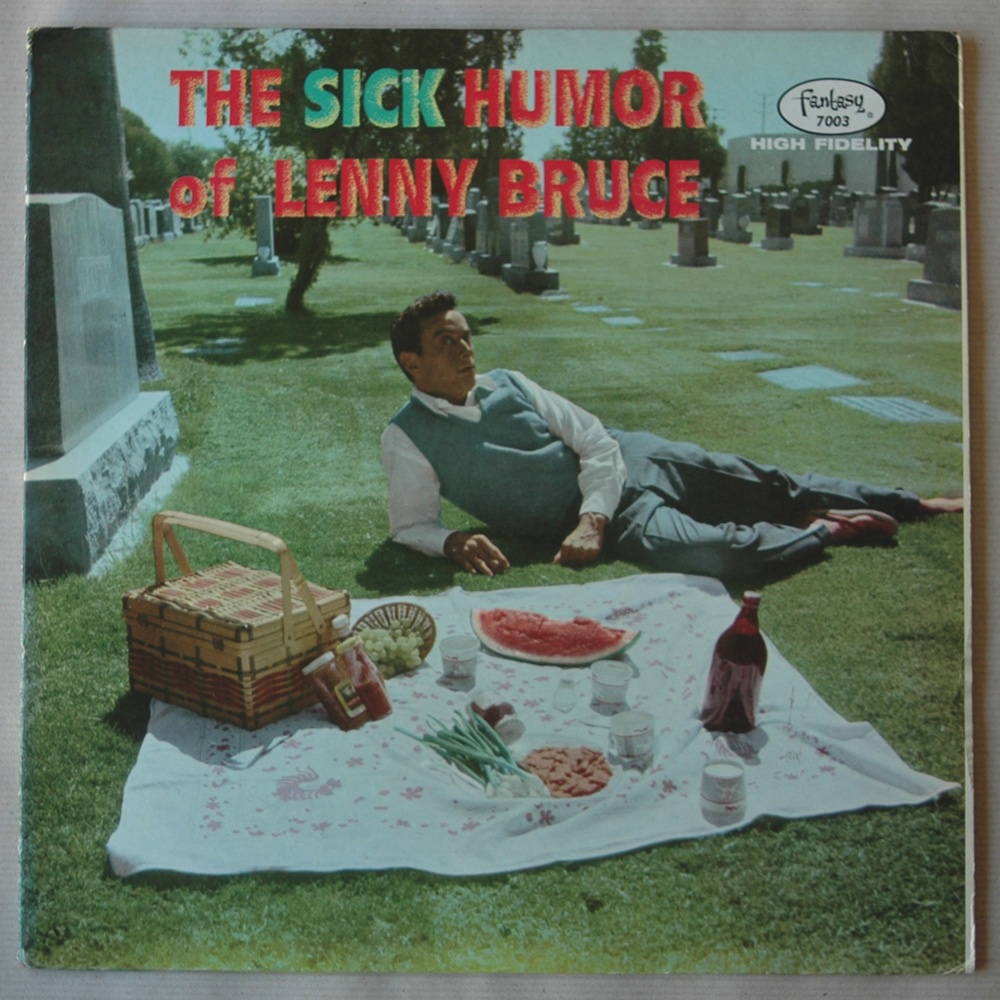
Acquired alongside it was a record exemplifying a very different aspect of comedy: The Sick Humor of Lenny Bruce. Originally released in 1959, my copy (Fig. 5) is from a 1987 re-issue (the same year Bruce's name came up in the lyrics of a certain song I then loved). I've read a fair amount about him over the years, but had never heard any of Bruce's comedy until now. I can't say it made me laugh, but it probably would have done had I been a young man in '59: I could see the appeal of it, at least. My sense of humour, I fear, has been eroded over time. I'm less often amused than I once was.


1987 was also the year The Green Flame was published. This is a dual-language anthology of Italian poetry (originals on the left, English translations facing them) that I finished reading on Friday. It was edited and presumably translated by Alessandro Gentili and Catherine O'Brien. Even though the word 'contemporary' appears in its subtitle, most of the poems in it are from the early-to-mid-20th Century. It includes authors I was already somewhat familiar with (such as Montale, Pavese, Ungaretti, Pasolini & Spaziani) along with others I knew only by name (Marinetti, Quasimodo, Sereni, Zanzotto) and still more I didn't know at all (notably Saba & Luzi).

My copy had been freely annotated in pencil by a previous owner. This was evidently someone fluent in Italian who was well able to take a critical view of the translators' work. Several translated words or phrases are glossed with clarifications or even crossed out and 'corrected'. As a monoglot I'm obliged to take the work of translators on trust, so it was interesting here for me to see a more knowledgeable reader's engagement with their renderings. There were some instances where the pencilled-in alternatives struck me as clearly preferable to the printed text, whereas most of the time I was unable to judge whether the 'edited' wording was any better than the original. In any event, it's a good anthology that has filled a gap on my poetry shelves.


When I'm working I like to have a large, thick, ruled notebook to scribble in. If I can’t make notes I struggle to think straight. With my employers being much too cheap to supply decent stationery, I buy my own. My choice for the past decade has been the Collins Ideal 6448, a casebound A4 book with 384 ruled pages. When I went to order a new one recently I was disconcerted to find them out of stock – which I hope is only a temporary state of affairs. As an alternative I bought myself the next best thing I could find: a Ryman A4 'Bumper' notebook. This has fewer pages (352) and thinner paper (70gsm rather than 80) than the 'Ideal', but it does have the advantage of being about half the price. I started writing in my new Ryman book on Monday, and think it will do the job well enough.