Know Before You Buy Native Plant Seeds
This Time: Making sure you know germination requirements of any native plants you plan to buy; Avoiding the danger in bee houses.
There is nothing like the excitement of purchasing seeds of native plants that will bring more birds and butterflies to your space. It will be a more rewarding process if you take care to avoid potential problems.
At this point in the process, you have completed finding a source for the native plants on your “Hot List”, following steps in the previous post. You should be getting excited about the possibility of bringing more birds and pollinators to your garden.
Before you buy, though, consider making one final check.
It is wise to review your chosen plants' germination requirements before making your final purchase. Why? Especially if you're new to gardening or to growing from seed, you need to know if any of your chosen plants have requirements that you will not have the time or energy to follow. Not every seed can be simply dropped into a prepared flower bed.
To make things a little more clear, here are some examples of germination requirements.
Germination Requirement Examples
Easy: Prep Ground and Plant
Most seeds that you are used to (if you are a new gardener) require you to simply prepare the soil, sprinkle on the seeds, and cover. Many native plants have the same requirements.
Somewhat Complex: Minor Prep Prior to Planting Seed
Examples of this type are a one-time hot water treatment or “scarification” (scratching the seed coats with something like sandpaper). Some require you to plant the seeds in the fall, meaning you will have to wait before planting if you are buying seeds in the winter.
More Complicated: Significant Steps Needed Prior to Planting
Some native plant seeds take some commitment to get going. For example, they may require you to simulate a winter prior to planting. You put seeds in your refrigerator for months after wrapping them up in moist paper.
The most involved I've ever had to deal with is wrapping seeds in a wet paper towel and keeping them in a plastic ziplock bag in the fridge for 60 days. I used a calendar reminder to make sure I took out the seeds and planted them at the right time. Otherwise, they would have stayed under my pack of tortillas and been forgotten.
These steps were not too difficult for me to handle, just new to me. You have to make your own decision on what is too much for you.
No matter what the instructions are for preparing seeds prior to planting, your seed provider should give you all the details you need.
An example of instructions from Prairie Moon on germination types, including “cold stratification”, appears in the Resources section below.
If you are prepared for any germination requirement and are ready to purchase the seeds on your Hot List, then order or purchase during the winter or offseason. The earlier the better so that you can have seeds and seedlings ready for planting season!
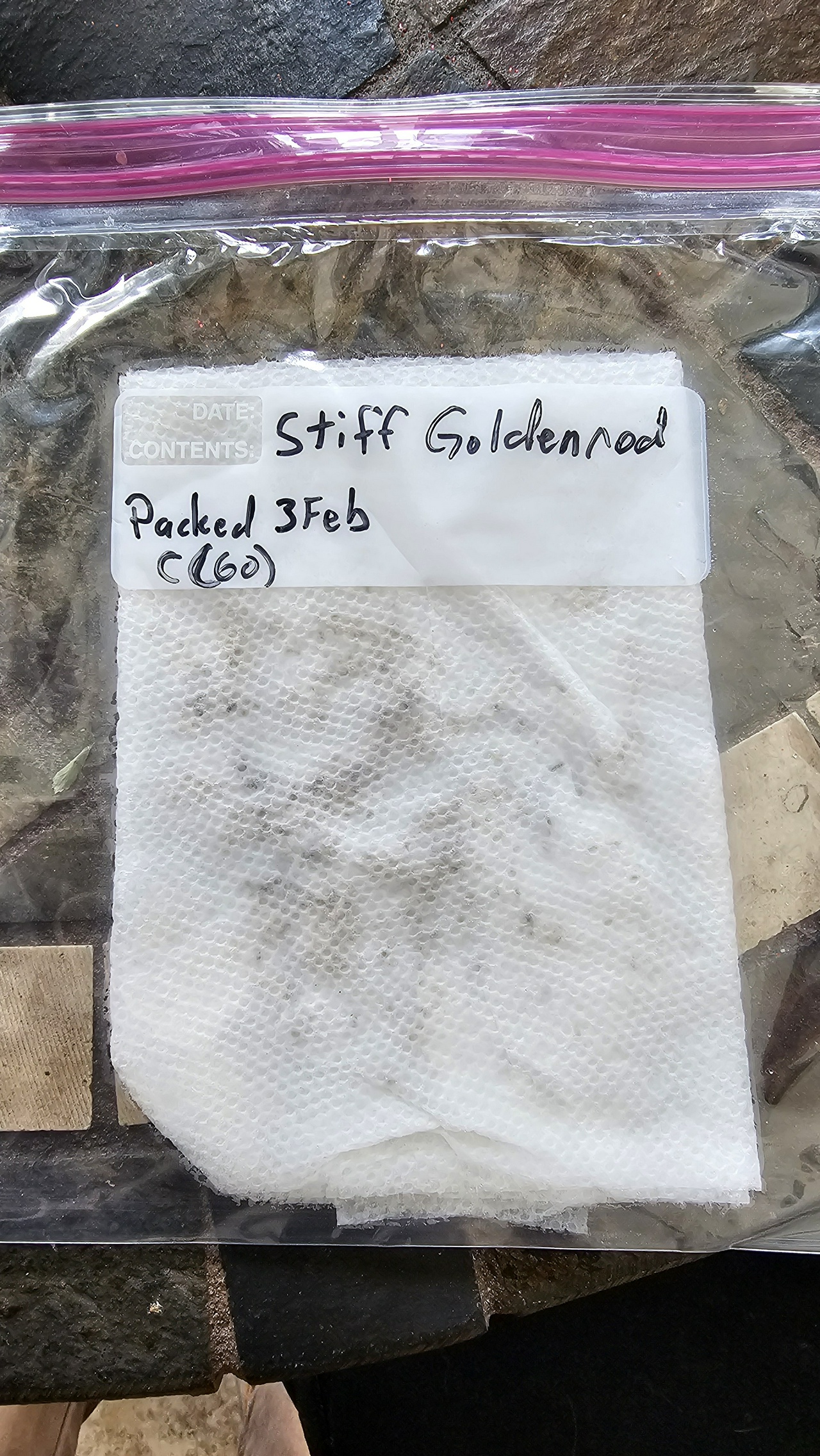
This is an example of my “cold stratification”. It shows a clear zip lock plastic bag with the handwritten label “Stiff Goldenrod, Packed 3 Feb C(60)”. Inside is a paper towel that is moist so that you can see dark spots underneath that are seeds.
Seasonal Continuous Improvement: Winter/Offseason
🐝The common assumption has been that, to support native bees that live above ground, all you have to do is buy one of those bee or bug houses with the bamboo tubes.
The problem with these houses, at least for bees, is that diseases and mite infestations can occur unless you regularly replace the tubes. I did not want to buy a new bee house every year, and that caused me to look for other options. I found that you can buy the tubes separately, and in quantity, for less than the price of a bee house. They come in many forms: bamboo, cardboard, reeds and more. This made it easier for me to change out used tubes inexpensively, just as insect scientists recommend.
Speaking of insect scientists, more information from the Xerces Society about creating and maintaining nests for native bees appears in the Resources section below.
Resources
🌺Prairie Moon Nursery: How to Germinate Native Seeds
- This is an example of the different categories of seed preparation steps. There are a lot more than you would guess. Still, if you only purchase a few packs of seeds, there should not be anything more complicated than you can handle.
- Check the guidance for those plants you potentially will purchase to see if you are comfortable with the germination steps.
- This guide also lets you look up a list of native plants that require each germination requirement. This could be a useful reference if you need to look this type of list quickly.
🐝 Nests for Native Bees Fact Sheet (pdf)
- Explains details you need to know to be successful at supporting cavity-nesting native bees which are about 30% of all native bees in North America.
🐝 Tunnel Nests for Native Bees (pdf)
- Plenty of information on what kind of tubes to get and how to make sure they are clean for native bees.
- Also includes how you can support native bees without buying any tubes.
🐝 5 Ways to Increase Nesting Habitat for Native Bees | Xerces Society
- A variety of ways to help native bees in North America.
[28 Jan 2026]
#HabitatGardening #BiodiversityGardening #Gardening #NativePlants #Nature #Environment #Conservation #Biodiversity #Invertebrates #SolarPunk #SolarPunkSunday #Thrutopia
I’m Joe Wynne, a gardener since 1965 when I started as a helper for my grandmother. We maintained irises then and I still have those plants today. I’m a former Tennessee State Park Naturalist, who now focuses on making my garden a habitat for native plants and native bees, birds and butterflies. I share what I learn.
Follow me on Mastodon. See articles from others in my magazine on Flipboard: Habitat Gardening
© Joe Wynne 2025-2026